Most people glance at these numbers and see “just another comparison of racket sports.”…..They shouldn’t.
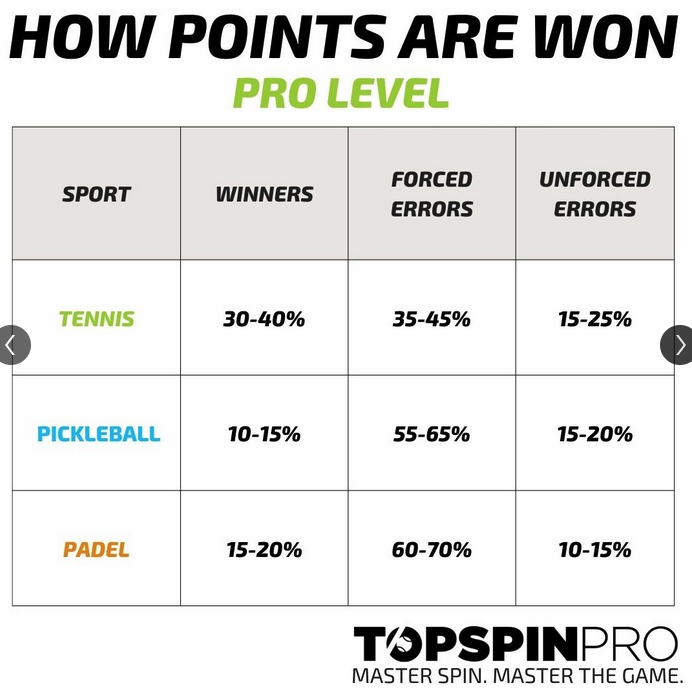
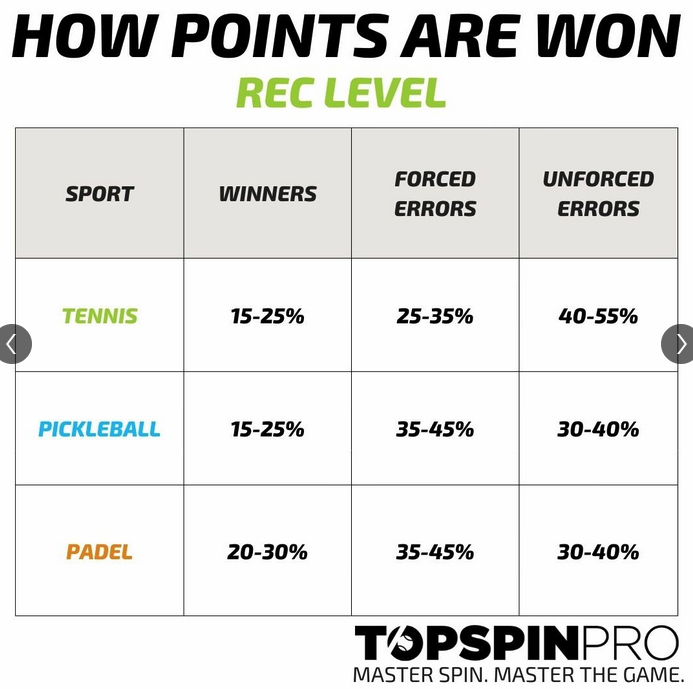
To the untrained eye, these are basic game statistics comparing tennis, padel and pickleball — how points are won via winners, forced errors and unforced errors, at recreational and professional level.
But let’s dig a little deeper, and see if we can draw any conclusions on whether tennis truly is the most difficult of the three to master.
At recreational level, tennis stands out immediately. Roughly 40–55% of points are decided by unforced errors, compared to 30–40% in padel and pickleball. Translation? Tennis demands technical competence before players can even sustain rallies. Miss-hits, double faults and timing errors end points quickly — and often brutally.
Padel and pickleball tell a different story. A higher share of points come from forced errors (35–45%), meaning rallies extend, patterns develop, and players feel “in the game” much sooner. This doesn’t mean the sports are easy — it means they are forgiving at entry level.
At professional level, the narrative flips again.
Tennis sees 30–40% of points won by winners, far more than padel (15–20%) or pickleball (10–15%). Elite tennis still rewards shot-making brilliance, pace, and individual execution under pressure.
Meanwhile, padel and pickleball pros win 60–70% of points by forcing errors. Mastery here is less about outright winners and more about positioning, patience, anticipation, teamwork, and decision-making. The skill ceiling is different — not lower.
So is tennis truly the hardest racket sport to master?
• Technically: yes. The barrier to entry is high and mistakes are punished immediately.
• Cognitively and tactically: the gap narrows quickly — especially at elite level.
• Emotionally: early tennis can be unforgiving, while padel and pickleball are designed to keep players engaged longer.
The business implications are huge.
Sports that reduce early unforced errors drive faster enjoyment, stronger retention, higher participation and better utilisation of space. Sports that reward winners preserve hierarchy, prestige and elite differentiation — but at the cost of accessibility.
Difficulty isn’t accidental.
It’s designed.
And that design quietly determines who plays, who stays, and which sports scale fastest in today’s market.
But that’s another post for another time….
(I should state: I can’t vouch for the absolute accuracy of these stats I found on a Facebook post from TOPSPINPRO recently but they generally do a good job, and instinctively and experientially, the numbers feel about right.)
(Originally published on LinkedIn)