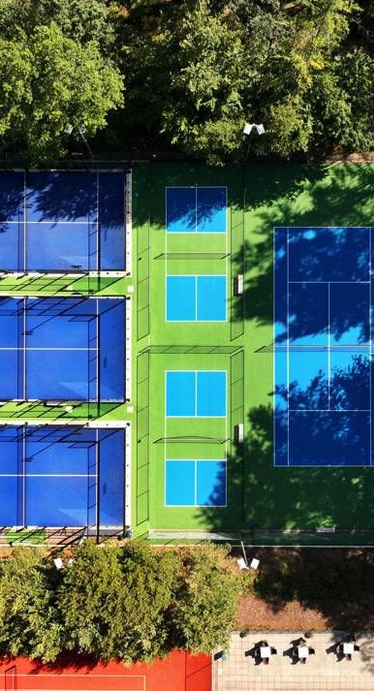
By 2030, most “tennis clubs” won’t really exist anymore.
They’ll be racket platforms.
Here’s what that actually means in practice:
• Tennis, padel, and pickleball coexisting under one roof
• Courts treated as modular assets, not fixed identities
• Social space, F&B, events, and programming driving EBITDA — not court hire alone
This shift isn’t ideological. It’s behavioural. People no longer commit to one sport – they practise and enjoy several.
Over the past five years:
• ~30–40% of racket-sport participants now play more than one discipline
• Padel and pickleball courts deliver materially higher revenue per square meter than traditional tennis
• Hybrid venues consistently outperform mono-sport clubs on utilization and dwell time
The implication is uncomfortable for traditional models.
Clubs designed around one sport, one surface, one pathway are increasingly misaligned with how people actually consume racket sports today — socially, flexibly, and across formats.
The winners won’t be the clubs that defend tradition the loudest.
They’ll be the ones that design for patterns of behaviour, not legacy structures.
By 2030, the most valuable clubs won’t ask: “Which sport are we?”
They’ll ask: “What kind of experience keeps people coming back — even when they’re not playing?”
So if you’re running, investing in, or advising a club today, the real strategic question is this:
Are you building for players…or for participation patterns?
(Originally published on LinkedIn)