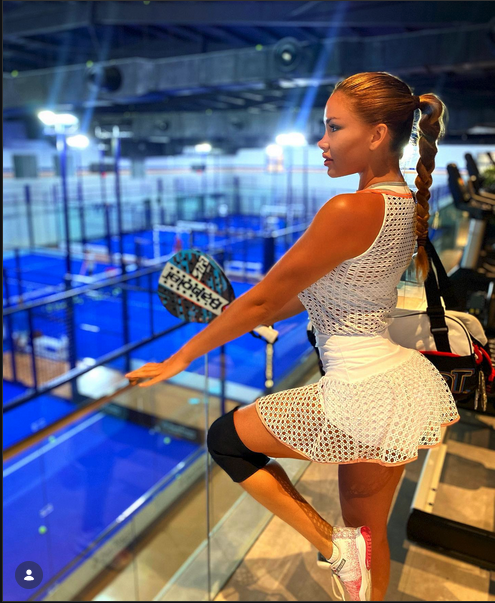
This image captures exactly why padel is booming — and also why we should question how durable that boom really is.
Over the past few years I’ve been asked whether padel and pickleball are the future of racket sports, or simply the flavour of this decade.
The numbers are extraordinary. Since 2020, pickleball participation has grown roughly 500% globally to ~24M players, while padel has doubled to ~30M. Tennis, by comparison, has grown a steady 26% to 106M.
Court supply tells the same story: pickleball courts up nearly 1,950% in five years, padel up 200%.
But growth alone doesn’t equal permanence.
Sport history is full of booms that cooled — racquetball in the US, squash in multiple markets, even boutique fitness concepts that scaled aggressively before consolidating. The pattern is familiar: rapid adoption, heavy private investment, media hype, oversupply, shake-out. What survives is what embeds itself structurally.
This is where I’ll be slightly opinionated.
In much of Europe, padel currently feels like an influencer festival. Corporate events, fashion tie-ins, DJ booths next to courts — everyone wants to be seen playing. It’s aspirational, social, visible and it that visibility which fuels growth. But fashionable sports are vulnerable. As soon as the cultural spotlight shifts, participation can soften. We’ve seen this before.
Pickleball is less glamorous — and that may be its strength. It’s cheap, easy to integrate into schools, adaptable (four courts on one tennis court), and public-sector friendly. In the US, it has already embedded itself into education systems and municipal planning. Major League Pickleball projects 40M US players by 2030, and Asia is accelerating. That kind of institutional depth matters.
Sports that endure tend to have public access, school integration, low barriers, and multi-generational appeal. Tennis has this. Football has this. Basketball has this.
Padel’s momentum is real, and in Spain it’s culturally embedded. But globally it remains heavily private-capital driven (~70% of facilities privately funded in mature markets)— which means fast growth, but also faster correction if utilization softens. Every boom feels permanent — until it isn’t.
If I had to take a 20-year view, I’d cautiously give pickleball the stronger chance of global endurance. Not because it’s trendier — but because it’s less dependent on trend.
Hype builds courts but institutions build sports. And history suggests only one of those lasts.
Sources: SFIA – Sports & Fitness Industry Association, International Tennis Federation, International Padel Federation, CAA Portas
(Originally published on LinkedIn)