When does building padel courts not make financial sense — but still make complete strategic sense?
I’ve been turning that question over in my head since watching the strategic direction of Bio- und Wellnessresort Stanglwirt, one of the most famous luxury resorts in the German-speaking world, dating back to the 1500’s.
It’s a 170-room, five-star property running an average 95% occupancy across the year. Four decades of serious tennis programming (6 indoor and 8 outdoor courts).
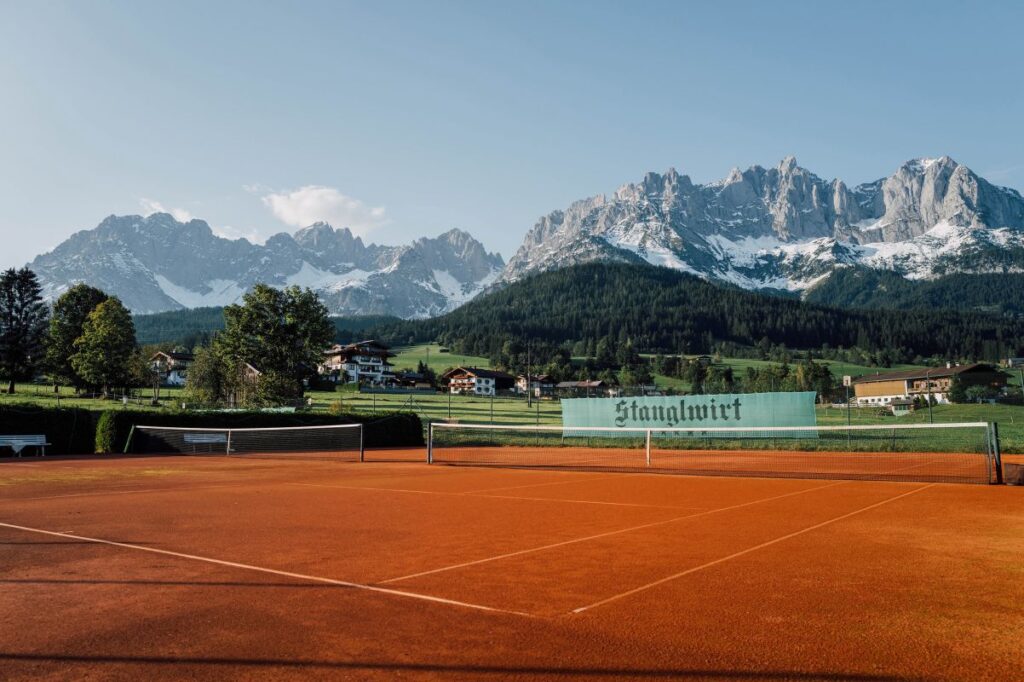
And yet, after converting one indoor court to padel (with utilisation reportedly around 25%), they are now converting that one outdoor tennis court you see in the photo below into two padel courts.
At first glance, the numbers don’t scream “obvious win.”
Assume a realistic alpine outdoor season of 200 days and eight playable hours per day (it rains a lot). Two courts create 3,200 available hours. At €45 per hour, maximum seasonal revenue is €144,000. At 25% utilisation, revenue is €36,000. At 40%, €57,600. At 60%, €86,400.
A quality outdoor alpine padel build — groundwork, drainage, lighting, glass — will cost roughly €80,000–€90,000 per court. Call it €170,000 total investment. To recover that in three years, you need roughly €57,000 per season, which implies around 40% utilisation. That’s significantly higher than last year’s indoor performance.
If this were a revenue-dependent urban tennis club, I would push back hard.
But this isn’t a club model. It’s a luxury positioning model.
Assume a conservative ADR of €550. Twenty incremental room nights influenced by “we have outdoor padel” generates €11,000. A handful of additional family stays during shoulder months and the financial picture shifts meaningfully. In high-end hospitality, protecting pricing power is often more valuable than maximising hourly court yield.
Then there’s the influencer dynamic. This resort famously relies on media and invited creators instead of traditional advertising. Hosting 8–10 relevant influencers over a season might represent €30,000–€40,000 in opportunity cost. In exchange, you get high-impact alpine padel visuals distributed to engaged audiences. Nielsen Sports data consistently shows that lifestyle-integrated sports content drives stronger digital engagement than standard facility imagery. Glass courts framed by mountains are brand assets in a way indoor tennis simply isn’t.
The Global Racket Sports Report 2025 notes padel and tennis participation up roughly 100% and 26% respectively since 2020. Whether we like it or not, guest expectations are evolving.
I’ll admit, my first reaction was skepticism. But you’re not always building courts to maximise utilisation. You’re building relevance – and in premium hospitality, irrelevance is far more expensive than a few under-booked hours.
That’s the part spreadsheets don’t always capture.
(Originally published on LinkedIn)