One thing I’ve learned working with facilities, investors and start-ups across Europe, the US and the Middle East is this:
Padel and pickleball aren’t just growing because they’re fun.
They’re growing because they’re social.
Recently, I was consulting for a multi-sport club deciding how to allocate new space. The tennis courts were busy, but the behaviour was predictable: arrive, play, leave.
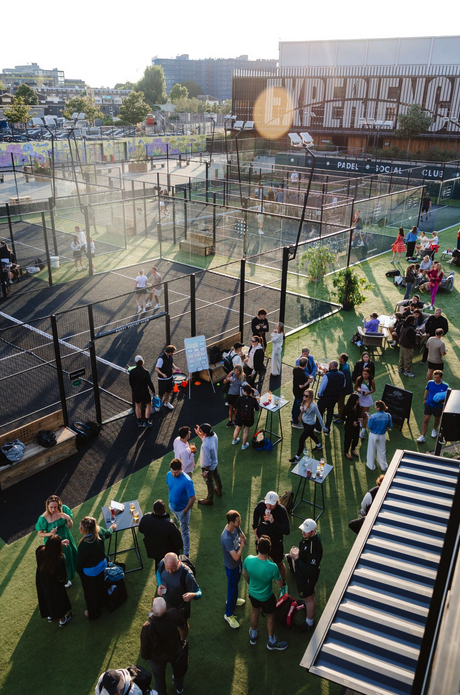
The padel players, on the other hand, turned the venue into a social ecosystem. People stayed for an hour before their booking and another hour after. The café was full. The noise level was higher. The overall energy was different.
And the data explains why this keeps happening.
According to The Racket Sports Race report:
Sociability is the single biggest growth driver for both padel and pickleball.
Here are the five factors I see most often in my work:
1. Easy entry leads to instant enjoyment.
Padel and pickleball allow players to rally, laugh and compete almost immediately.
Padel rallies are 3–4 times longer than tennis at beginner level, and pickleball has the lowest skill barrier of the three sports.
Clubs tell me that first-time players rebook faster than in tennis, often within 48 hours.
2. Court design drives connection.
Smaller courts = closer interaction.
Walls in padel keep the ball in play.
The kitchen in pickleball creates natural pause points.
These aren’t sports where you exchange a few polite words.
People actually talk, joke, and build relationships.
3. A more diverse player base.
One standout stat:
Female participation is around 40% across tennis, padel and pickleball.
In Austria, Germany and the UK, I’ve seen women’s padel groups grow faster than any tennis equivalent. The social environment simply feels more welcoming to many newcomers.
4. Clubs can design for dwell time, not just court time.
The most successful venues I’ve advised are the ones that build around sociability: coffee bars, coworking tables, viewing balconies, music, lounge areas and mixed social events.
Padel and pickleball players use these spaces naturally. That translates directly into increased revenue per visit.
5. They suit real life.
A padel or pickleball match fits neatly into 60 minutes.
It’s exercise without the intimidation.
It’s competitive without being exhausting.
And for many busy professionals I meet, that balance is a game-changer.
What does all this mean?
Tennis remains the global anchor—with the strongest pathways, governance, and media presence.
But padel and pickleball are becoming the social engines of the racket-sport ecosystem.
The clubs and investors I see thriving are the ones that recognise this dynamic and build models where all three sports complement each other.
Because today, racket sports aren’t just about how you hit the ball.
They’re about where and how you belong.
(Originally published on LinkedIn)