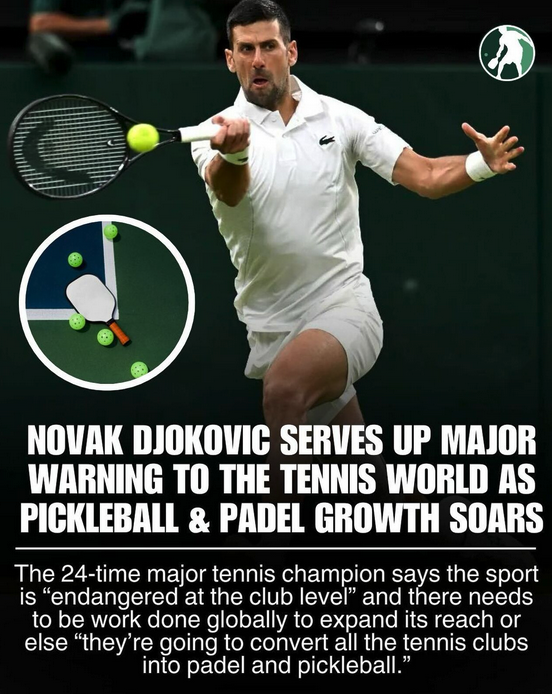
Tennis vs Padel vs Pickleball – Coexistence or Cannibalization?
Over the past few years, I’ve spent a large part of my professional life immersed in tennis, padel, and pickleball projects—advising clubs, operators and investors on how to navigate the fastest shift the racket-sports world has ever seen.
From walking through overcrowded padel clubs in Madrid, to assessing pickleball build-outs in the US, to working with tennis operators who feel the pressure of conversion decisions, one can see the transformation from the front row.
And the same question comes up in nearly every boardroom:
Are padel and pickleball expanding the market, or cannibalizing tennis?
My answer is shaped by what I’ve seen on the ground, and what the numbers confirm.
According to The Racket Sports Race report :
1. The participation boom isn’t a fad
Tennis has grown steadily from 84M to 106M players since 2020.
Padel has doubled.
Pickleball has multiplied by six.
When I speak to operators, it’s clear this is not competitor displacement—it’s new people entering racket sports altogether.
2. Tennis is the gateway, not the victim
In nearly every project I touch, former tennis players make up a substantial portion of padel and pickleball’s early adopters.
About 35% of players in both sports come from tennis, and around 65% of racket-sports players play more than one discipline.
This is not the collapse of tennis—it’s its own alumni fuelling the wider ecosystem.
3. But the pressure on tennis facilities is real
When you sit with a club owner looking at empty daytime courts and a waiting list for padel or pickleball, the “conversion debate” becomes more than theoretical.
One tennis court = three padel courts = four pickleball courts.
And that same tennis court can generate 3–7x the revenue when converted.
I’ve watched this decision play out in Spain, where 16,000 padel courts now exceed the country’s 13,000 tennis courts. It’s happening in the US too, where over 10% of tennis courts have been converted or overlaid with pickleball lines.
You can’t ignore the economics.
4. The real story is not cannibalization—it’s divergence
Tennis remains the global anchor with the most mature pathway, the strongest governance, and unmatched media power.
Padel is Europe’s lifestyle sport of choice.
Pickleball is North America’s social rocketship.
Each sport is winning different types of people, at different life stages, for different reasons.
When I work with clubs and investors, the organisations thriving the most are the ones abandoning the “either/or” mindset and embracing the multi-sport future.
The smartest operators aren’t asking:
“Which sport will win?”
They’re asking:
“How do we create an ecosystem where all three can thrive—and where players float naturally between them?”
That’s where the industry is heading.
And those who adapt early will own the next decade of racket sports.
(Originally published on LinkedIn)