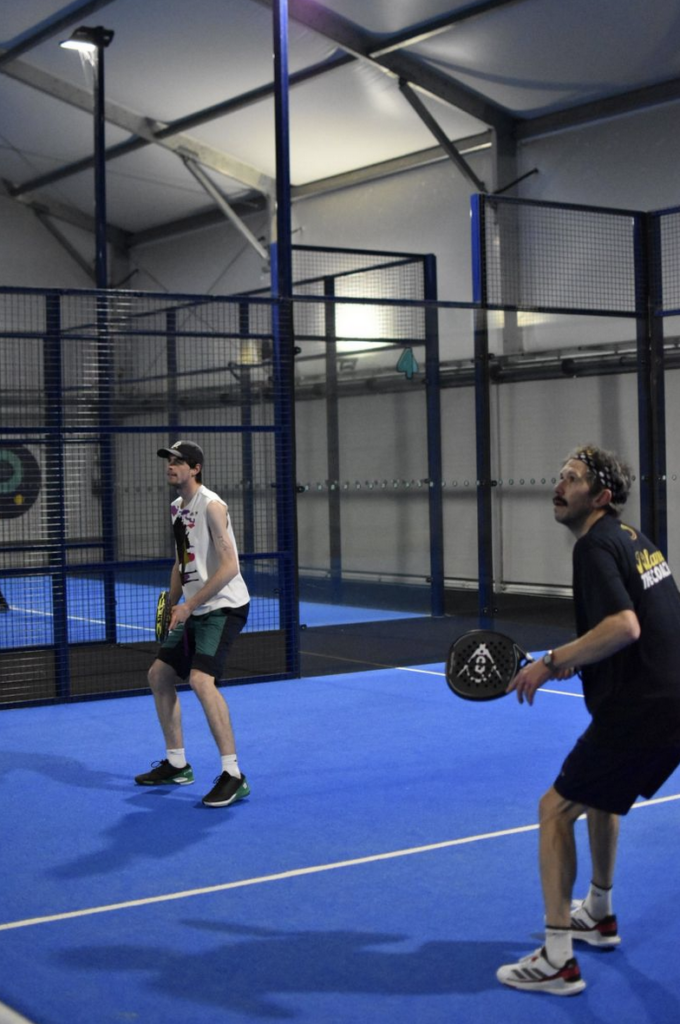
The ratings conversation in padel (and pickleball) feels like it’s hitting a real inflection point.
One thing that’s still under-acknowledged is where responsibility currently sits. At both international and national level, ratings simply aren’t a strategic priority yet. Governing bodies are understandably focused on participation, infrastructure, tours, funding and Olympic pathways. The result is that ratings have been left to the private sector to figure out — booking platforms, leagues and competition apps all solving the same problem in parallel.
That fragmentation didn’t happen because of bad intent but out of necessity and lack of foresight.
What’s interesting is that, long term, this doesn’t really serve the private sector either. Players move between clubs, cities and platforms. If the number doesn’t travel with them, trust erodes quickly. And once trust goes, the rating loses most of its value. At some point, convergence becomes more powerful than differentiation.
Let’s take a brief tangent – the sport from where I came – and see what we can learn from its mistakes.what
There’s a tendency to look at tennis and assume it “got this right”. It didn’t. The International Tennis Federation tried to launch (and re-launch… and failed) their “International Tennis Number” to globally standardize tennis ratings. But the sport preferred its overlapping national systems, opaque calculations, political adjustments, and rating inflation that players still complain about decades later. What did work was not precision — it was accessibility. The beauty of the USTA’s “National Tennis Ratings Program” was that players understood them, could self-rate, and had a clear sense of progression.
Padel and pickleball will need something similar: low friction at entry, intuitive ranges, and the ability to move up or down mathematically as competitive data grows.
A unified rating system would also add credibility. It’s hard to imagine any serious Olympic ambition without a shared language for player level that extends beyond individual platforms or countries.
That said, here’s the nuance. Ratings may matter slightly less in padel and pickleball than they ever did in tennis. Both sports are more forgiving, more social, and structurally resilient to small mismatches. A slightly uneven game doesn’t automatically break the experience — or the community.
So maybe the goal isn’t perfection from day one. Maybe it’s something good enough, shared and trusted, rather than precise but fragmented.
The real question is whether the ecosystem optimises first for mathematical purity — or for portability and adoption…. and also, if there’s an appetite between all the different stackeholders to bandy together on this for the better of the sport.
(Originally published on LinkedIn)