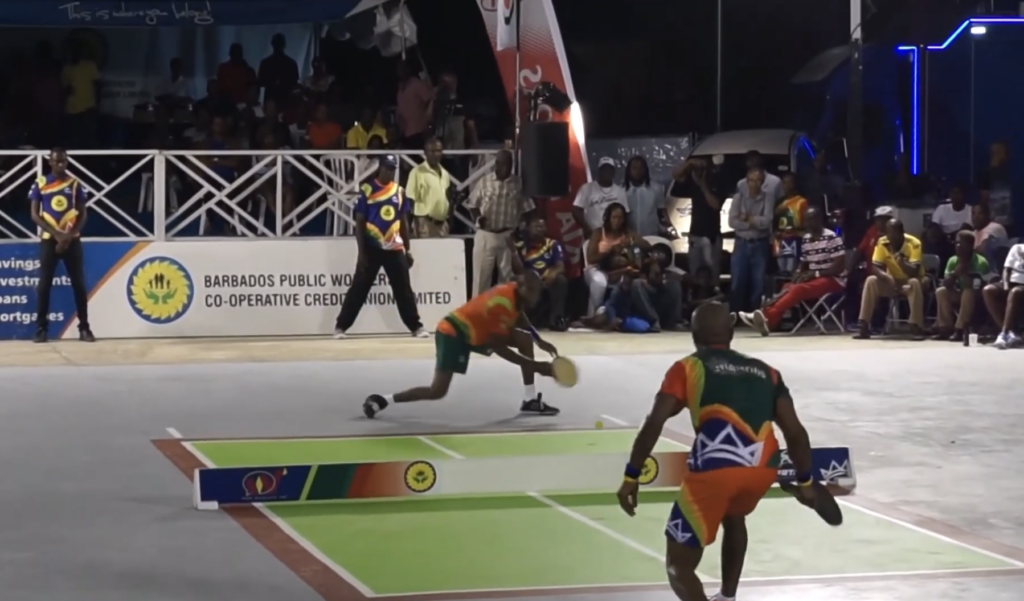
We talk about three racket sports. The world is clearly playing a lot more than that.
This video from my good friend and rackets-guru Eric Thorel, stopped me for a moment—not because it DIDN’T highlight tennis, padel or pickleball, but because it showed other racket games being played in front of real crowds, in real places, across cultures most of us in the industry rarely talk about. Some of them I couldn’t even name. And yet they had spectators, rituals, noise, atmosphere. They were real and they were alive.
It’s a useful reminder that narrative dominance is not the same as cultural dominance.
Right now, tennis, padel and pickleball dominate the industry conversation. They dominate investment decks, LinkedIn feeds, participation reports and panel discussions. And yes—by the numbers, that dominance is real. Tennis still counts roughly 100+ million players globally, while padel and pickleball have been growing at headline-grabbing rates of 100–500% since 2020 (depending on the market).
But the headlines don’t always capture the sublines because participation statistics and funding flows only tell part of the story.
What this video shows is that racket sports, historically, have never been neat, standardized or centrally controlled. They emerged locally. They adapted to space constraints, culture, climate and social habits. They attracted crowds long before they attracted federations.
Today, much of the debate feels narrow by comparison. We argue about court conversions. About which sport is “winning.” About governance, formats and commercial rights. All important questions—but they assume the future of racket sports will look like a scaled version of what already exists.
I’m not convinced that’s true.
Cultural relevance doesn’t always follow media attention. And innovation doesn’t always come from the center. Sometimes it happens at the edges—before anyone thinks to name it, regulate it or monetize it.
The risk isn’t that tennis, padel or pickleball lose dominance – it is instead that the industry becomes so focused on those three stories that it stops noticing how much bigger, messier and more creative the racket-sport world actually is.
Historically, sport has always evolved whether the industry was ready for it or not – and it continues to evolve in some other corner of the world whilst we hit another tennis forehand, pickleball volley and padel smash.
(Originally published on LinkedIn)