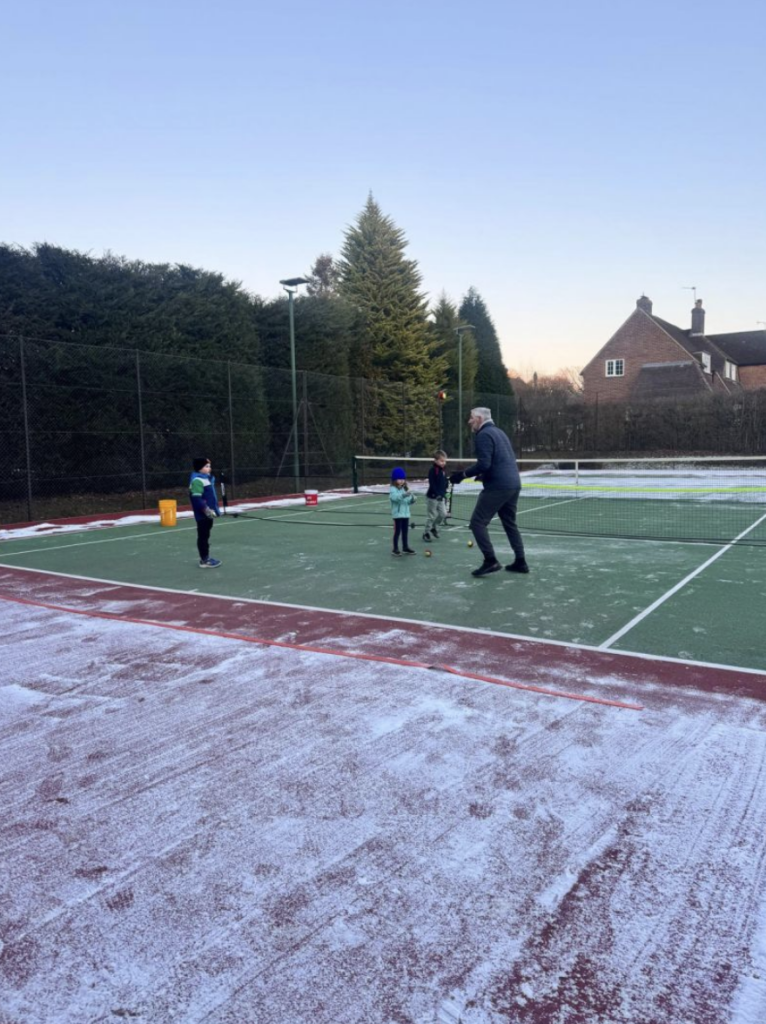
Lets stop trying to protect tennis, or celebrate padel, or embrace pickleball. The real war globally is indoor vs outdoor.
I’m reposting a thoughtful piece from Lucy Tysoe highlighting a stark reality: The UK has around 23,000 tennis courts, yet fewer than 2,000 are indoor — meaning grassroots tennis thrives in summer but struggles through winter with cancellations, disrupted schedules and inconsistent revenue. In contrast, more than 70% of UK padel courts are indoor, offering year-round availability and predictable income. That gap isn’t just operational — it highlights a deeper structural shift in how racket sports are built and monetized globally.
That contrast is bigger than one club or one sport.
It exposes the structural shift happening across global racket sports. It shows that, whilst participation debates dominate headlines, infrastructure determines participation.
Globally, tennis still has roughly 700,000 courts. Yet the vast majority remain outdoor. By contrast, padel has expanded from around 20,000 courts in 2020 to approximately 60,000 in 2025 — and much of its growth in key markets has come through indoor premium facilities. Pickleball has exploded from roughly 4,000 courts in 2020 to more than 80,000, driven heavily by adaptable, year-round formats.
So, it’s not about which sport is “better” but more which model fits modern urban and economic realities.
Urban density is rising. Climate volatility is increasing. Investors demand utilization rates that justify capital expenditure. Coaches want income stability. Players expect reliability. Municipalities want assets that generate consistent community engagement rather than seasonal spikes.
Indoor facilities change the economics completely. They reduce seasonality, increase programming hours, support hospitality integration, and improve return per square meter. In many cases, one converted tennis court can become three padel courts or four pickleball courts, multiplying bookable inventory and revenue potential. Is this a sporting decision? … Nope, it’s a real estate calculation.
If tennis does not accelerate investment into modern, year-round infrastructure, it risks competing in a participation market shaped by Victorian-era facility models. Not because the sport lacks appeal, but because the asset base limits scalability.
Over the next decade, the winners in racket sports will not simply be defined by participation numbers or media rights. They will be defined by who solves the infrastructure equation. Hybrid “racket hubs” integrating indoor courts, hospitality, fitness, and community space are set to be the dominant format in parts of Europe, the GCC, and North America.
The winners will be those who are building the indoor ecosystem that the next generation of players expects. Why? ….Because in the end, weather does not negotiate. Real estate does.
(Originally published on LinkedIn)