COURTS ARE EASY. CLUBS ARE HARD.
I went to the opening of a new padel facility last weekend. Music was up, food was flowing, courts were full and everyone was smiling.
And I left thinking: this could be one of the first facilities in the area to close.
That sounds harsh. But boom-time opening parties tell us almost nothing about whether a club will survive when the novelty fades. The truth is that you dont need to be a heroe to fill courts when demand is outstripping supply – but that does not make you a great operator. It makes you open.
THE PRODUCT IS NOT THE COURT
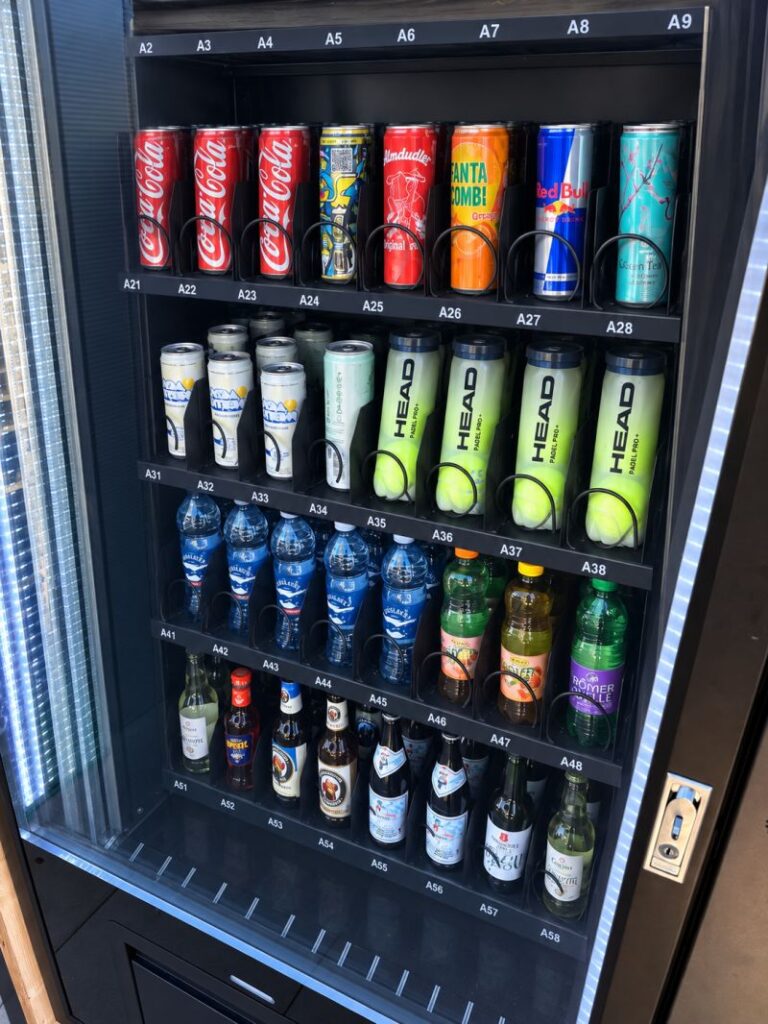
This facility has courts, a couple of benches, a vending machine for drinks, balls and rackets, and a porta-loo. All outdoors.
That may be enough to sell court time today. But it is not enough to earn loyalty tomorrow.
I know how I choose where to play. I want a place where somebody knows my name; where there is a social match I can join when my group cancels; where I can have a drink afterwards and meet the people I’ll probably play with next week. I want a club, not simply a fenced rectangle with a booking link.
The facilities that win will make the awkward moment before a match feel easy, and the half-hour after it worth staying for. Reception staff, organised games, leagues, coaching, community, decent changing rooms, a bar: these are not indulgences. They are retention infrastructure.
BOOM DOESN’T CANCEL COMPETITION
The scale of the current rush is real. Playtomic and Strategy report that 3,282 padel clubs opened globally in 2024—nearly nine a day—while more than 7,100 new courts were added. That is extraordinary growth. It is also a warning: every new court makes “we have padel courts” a less convincing proposition.
The same report forecasts 70,000 padel courts worldwide by 2026. Supply will catch up in many markets. When it does, players will not stay loyal to the most basic option just because it was there first.
BUILD SOMEWHERE PEOPLE BELONG
I’m not arguing every facility needs a rooftop cocktail bar and a design agency. Some of the best padel experiences are simple. But simple must still feel intentional.
A great club gives people reasons to return when there is no opening-party buzz left. It turns newcomers into regulars, regulars into organisers, and organisers into advocates. Thats the moat.
The future belongs to operators who understand that they are not renting out courts. They are hosting people.
(Originally published on LinkedIn)