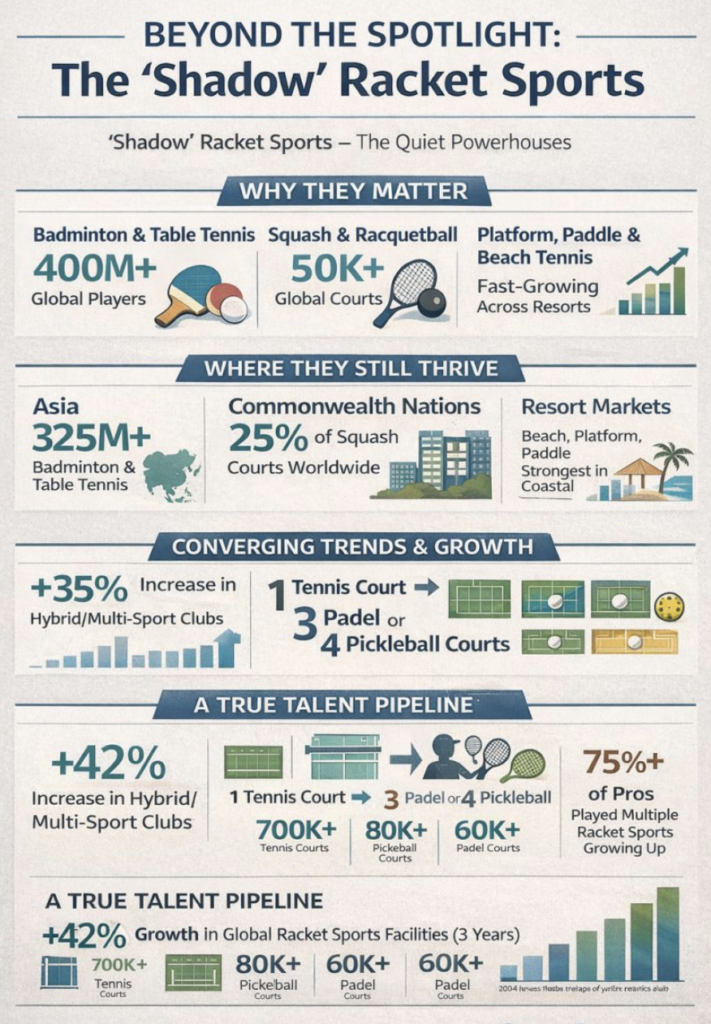
Don’t be fooled — while pickleball, padel and tennis grab the headlines, a bunch of “shadow” racket sports are quietly shaping participation, talent pipelines and community sport everywhere.
Why they matter
• Badminton and table tennis are mass-participation engines (especially across Asia and schools) — they feed athletic skills, early motor learning and low-cost competition pathways that bigger racket sports rely on.
• Squash and racquetball pack high-intensity training into small footprints — ideal for dense cities, corporate wellness and performance development.
• Beach tennis, platform tennis, real tennis and paddle variants keep innovation alive, offering local culture, tourism and niche events that sponsors love.
Where they still matter
• Asia (badminton, table tennis) — huge grassroots & elite systems.
• Commonwealth countries and urban centres (squash) — strong club networks and coaching ecosystems.
• Resort and coastal markets (beach tennis) — tourism and experiential revenue.
Could they grow again?
Yes. Hybrid clubs, multi-sport conversions and the race for indoor, year-round activity mean these sports can scale with modest investment. They’re also resilient to noise/zoning issues that dog some outdoor sports.
Numbers that matter (from a recent industry analysis):
tennis still leads with ~106M players (2025), padel ~30M and pickleball ~24M — but court growth is staggering (tennis ~700k courts vs padel ~60k and pickleball ~82k) and conversions (1 tennis court → ~3 padel or ~4 pickleball) have changed facility economics. These shifts don’t erase the other racket sports — they reframe where and how those sports add value.
Why you shouldn’t ignore them
• Talent & retention: many elite athletes cross-train or start in these “other” sports.
• Facility optimisation: adding a squash or table-tennis hub increases year-round utilization.
• Community & inclusion: low-cost, small-footprint racket sports reach different demographics.
Story: I visited a suburban club where a converted squash court program became the school-aftercare hit — kids discovered racket skills there before moving to tennis or padel. That pipeline matters more than the headline growth figures.
Bottom line: The market isn’t zero-sum. Treat the full racket family as complementary assets — they diversify revenue, deepen community roots and protect facilities against single-sport risk. If you want, I can help map which “shadow” racket(s) would boost utilization and revenue for a specific club or market.
(Originally published on LinkedIn)