Wimbledon Is the Biggest Marketing Campaign Tennis Never Pays For.
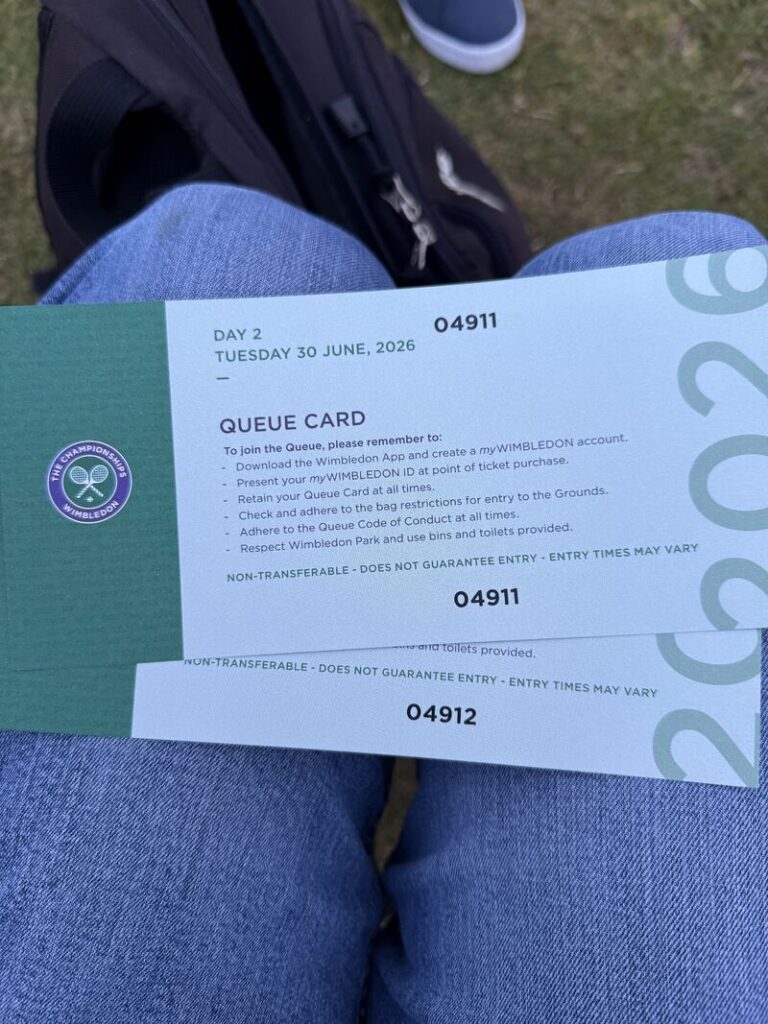
I was vividly reminded of this as I queued at the tournament last Tuesday. I arrived at 4:30am and was 4,911th in line! Nearly 5,000 people had chosen to get up even earlier than me just to get a piece of the action.
Most of those people aren’t even avid tennis fans. Many don’t play the sport. Yet they have heard of Wimbledon.
That, in itself, is extraordinary and it struck me that the tennis industry often overlooks one of the most powerful marketing opportunities it has.
Every summer, Wimbledon does something that no federation, club or advertising campaign could ever afford to replicate: it makes people want to pick up a racket.
More than 526,000 spectators attended Wimbledon in 2025, while the Championships were broadcast to hundreds of millions of viewers in over 200 territories. For two weeks, tennis dominates conversations in homes, offices and on social media. The sport receives a level of global exposure that brands spend billions trying to achieve. When I was living in the UK, the joke was that tennis is a sport played for 2 weeks a year… during Wimbledon.
Sad joke, to be honest. And it begs the question:
How many clubs are actually prepared for what happens next?
Too often we celebrate the television audiences, the sold-out Centre Court and the incredible champions, then simply unlock the gates on Monday morning expecting new players to appear. Inspiration alone rarely creates participation.
According to the ITF Global Tennis Report, there are over 100 million people playing tennis worldwide. That’s an incredible foundation. Yet every Wimbledon also creates thousands of potential new players who may never hit their first ball because nobody gave them an easy reason to start.
The clubs that win aren’t necessarily those with the best facilities but the ones that understand momentum: they run beginner festivals during Wimbledon fortnight. They organise family open days. They stream matches in the clubhouse. They remove barriers, create excitement and make it easy for someone to say, “I’ll give tennis a try.”
That’s something I have seen first-hand throughout my career. The biggest spikes in enquiries rarely came from expensive advertising campaigns. They came when we were ready to capture the emotion that Wimbledon had already created for us.
Perhaps tennis doesn’t need another marketing campaign.
Perhaps it simply needs to become much better at converting the one it already gets for free.
Its an opportunity that only comes around once a year…. every year… since 1877.
(Originally published on LinkedIn)