The future of racket sports will belong to facilities that don’t just offer courts — they offer insight.
Not long ago, data and video analysis were luxuries reserved for professionals. Access to match analytics, shot tracking, and line-calling technology required expensive infrastructure and a small army of technicians.
Over the last decade, we’ve seen a rapid democratization of technology in racket sports. A wave of devices, sensors, and AI-powered software now gives any player access to the kind of insights that used to belong exclusively to ATP and WTA stars.
These innovations fall into two camps:
1. Hardware-based systems, such as PlaySight, that rely on cameras and sensors installed around the court to track player movement and ball trajectories with impressive precision.
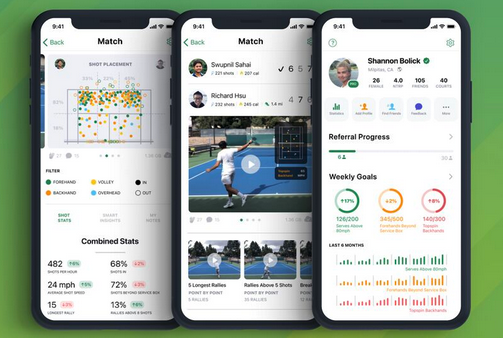
2. Software-based systems, such as SwingVision, that use the power of AI and a smartphone camera to capture, analyze, and coach — no infrastructure required.
Hardware systems deliver extraordinary accuracy and a polished, high-performance environment. For elite academies, that makes sense. But for most facilities, the installation and maintenance costs are prohibitive.
Software, meanwhile, has quietly become the smarter business move. It’s simpler, cheaper, and infinitely more scalable. A single app can transform a basic tennis or pickleball court into a “smart court” — generating video highlights, shot statistics, and line-call accuracy comparable to professional systems. For club owners, that means less capital expenditure and more member engagement.
SwingVision is already being used to make official line calls in USTA junior tournaments and college matches in the U.S. The same AI that analyzes your serve can now settle disputes instantly, fairly, and with a level of accuracy that builds trust between players. For facility owners, that’s a game-changer — fewer arguments, more professionalism, and a new layer of credibility for in-house competition.
Looking forward, the implications are enormous. Over the next decade, we’ll see:
– Seamless integration across sports — with tennis, pickleball, and padel data feeding into unified platforms.
– AI-assisted officiating at the club level, making “human error” disputes a thing of the past.
– Integration with health and fitness ecosystems, linking on-court data with player wellbeing.
– New revenue models, where members pay for premium analytics or automated match highlights.
The message for facility owners is clear: this isn’t a passing trend. Smart technology is redefining what players expect. Those who adopt early will gain a competitive edge — attracting new members, retaining existing ones, and offering a richer, more modern experience.
The next generation of players won’t just book a court — they’ll expect a connected one.
Smart facilities won’t just host matches. They’ll power them.
(Originally published on LinkedIn)