Padel + Bowling + 5-a-side Football + Urban Cricket … all under one roof?! Does it make sense?
I was recently pitched this concept and, at first, it genuinely stopped me in my tracks. My instinctive reaction was probably the same as most people in this industry: some sports naturally belong together, others simply don’t.
Tennis + padel makes sense. Padel + pickleball, even more so. Keep it within the same ecosystem and it feels logical, almost inevitable.
But once you start mixing completely unrelated sports, the concept begins to feel forced, like you’re trying to combine audiences that were never meant to overlap.
The more I thought about it though, the more I realised this is the wrong way of looking at it: this isn’t really about the sports but more about the system around them.
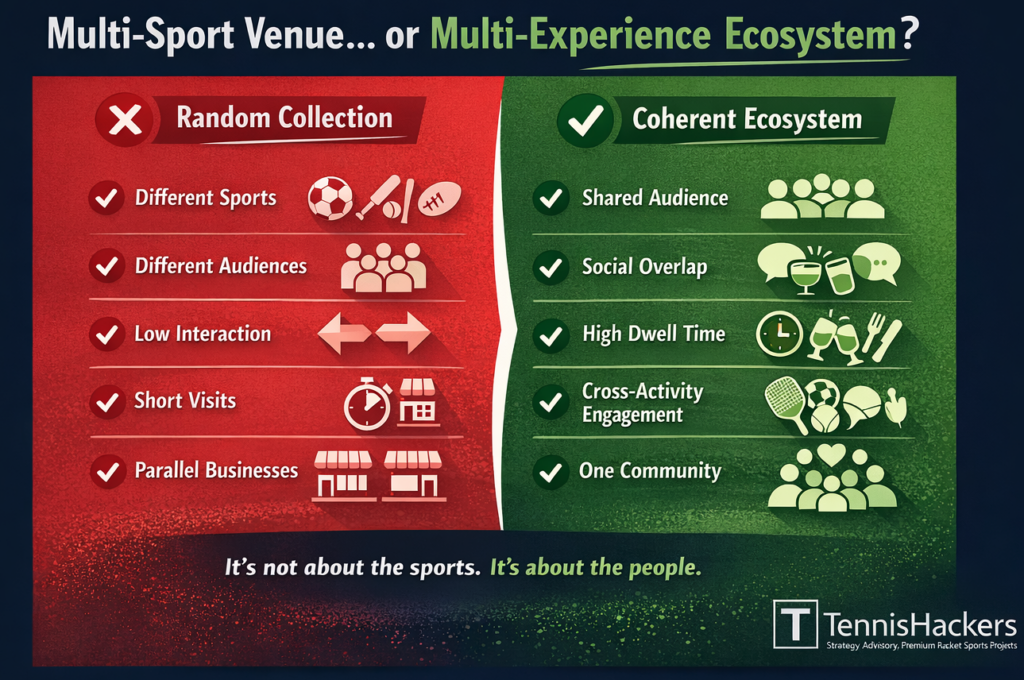
Mixing sports only works if it creates a coherent social ecosystem. Otherwise, it becomes nothing more than a well-designed collection of activities sharing the same roof, but not the same energy, behaviour, or customer journey. That distinction is where concepts like these succeed or fail.
The first thing that matters is audience overlap. It’s not about whether the sports are similar, but whether the people are. Do they share motivations? Are they there for competition, for socialising, for fitness, or simply for leisure? If the audiences don’t align, you’re not creating synergy, you’re fragmenting demand across multiple user groups that coexist but never connect, and that rarely builds something durable.
The second is dwell time, which in many ways is the real product. The most successful venues today are not defined by the sport they offer, but by how long people choose to stay. In many clubs, 70–85% of revenue doesn’t even come from core players, but from social usage around the sport.
So, if adding more sports increases dwell time, encourages people to arrive earlier, leave later, and spend more time off-court, then it works. If it creates shorter, more transactional visits, it doesn’t matter how many activities you offer, you’re diluting the experience rather than strengthening it.
The third, and probably most overlooked, is community overlap. The real value is created when different groups start blending. When a padel player tries something new, when a football group stays for food and ends up watching another game, when the venue starts to feel less like a facility and more like a shared social space. If that crossover doesn’t happen, you’re effectively running parallel businesses under one roof, with none of the upside of integration.
So maybe the question isn’t whether the sports fit together but whether the people do.
If they don’t, you don’t have a concept, you just have a building.
(Originally published on LinkedIn)