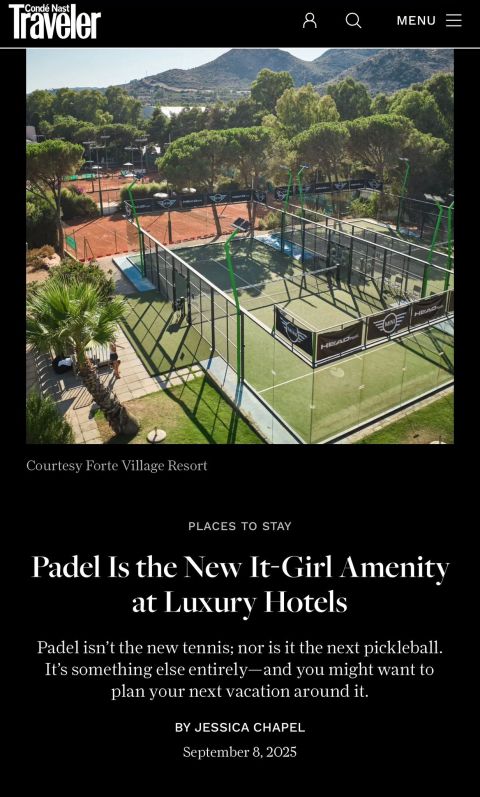
Could Padel Tourism become one of the most commercially important shifts the racket sports industry has seen in decades?
For years, I worked in and around “tennis resorts”. The reality is that very few resorts survive because of tennis alone: most are simply resorts that offer tennis.
The overwhelming majority of guests are not booking purely because of the tennis courts or the coaching program. They are buying a broader experience:
wellness, food, relaxation…and increasingly, flexibility in how they spend their time. Tennis was often an important amenity but rarely the sole commercial driver.
That is why I find the emergence of specialist padel tourism operators so interesting.
Companies like Privé Padel are not just selling court time. They are smartly packaging padel into a premium lifestyle and travel product.
And unlike traditional tennis tourism models, padel may actually be structurally better positioned for this evolution. Why? Because padel is inherently social.
The sport naturally lends itself to: groups, couples, mixed abilities, shorter stays, networking, luxury hospitality environments.
In tennis tourism, one recurring issue was always the fragmentation of guest interests. Very few resorts could sustainably fill rooms with “pure tennis guests” week after week.
Padel changes some of that dynamic because the sport itself is part entertainment, part social glue. You do not need a lifelong technical background to enjoy it quickly and neither is elite athleticism a necessity.
Critically: people tend to play together, not separately by level – unlike tennis.
That matters enormously from a hospitality perspective.
The interesting shift now is that padel tourism may be able to position itself not just as a side activity attached to resorts but THE reason to travel.
The latest reporting around padel tourism shows the sector expanding into new markets, with specialist operators building curated travel ecosystems around the sport itself (see comments)
And hospitality groups are paying attention because from a business standpoint, padel solves several problems simultaneously:
– high social engagement
– strong court utilization
– broad demographic appeal
– premium positioning potential
– events and community creation
Tennis resorts traditionally struggled with one core issue: high operational complexity serving a relatively narrow participation base….will padel manage to broaden that funnel substantially?
So, what’s the lesson for the wider racket sports industry? the future is probably not about building facilities around a single sport identity but building integrated lifestyle ecosystems where racket sports become part of a larger experiential offering.
That’s where I believe hospitality, wellness, tourism and racket sports increasingly converge. And right now, padel is moving faster than tennis in understanding that shift.
(Originally published on LinkedIn)